Wanting to be healthy is not the same as doing it.
A consolidated read of India's preventive healthcare industry, and a map of exactly where people's good intentions break down.
Intent that never becomes action.
Indian consumers say they want preventive care. Digital health products still fail to turn that intent into action.
Before anyone designs a screen for a preventive health platform, the team needs to know the terrain: how big the market is, who is already serving it, who is being missed, and why the people who say they care about their health do not follow through.
My job was to consolidate that evidence into one body of research that product, design and business could all work from.
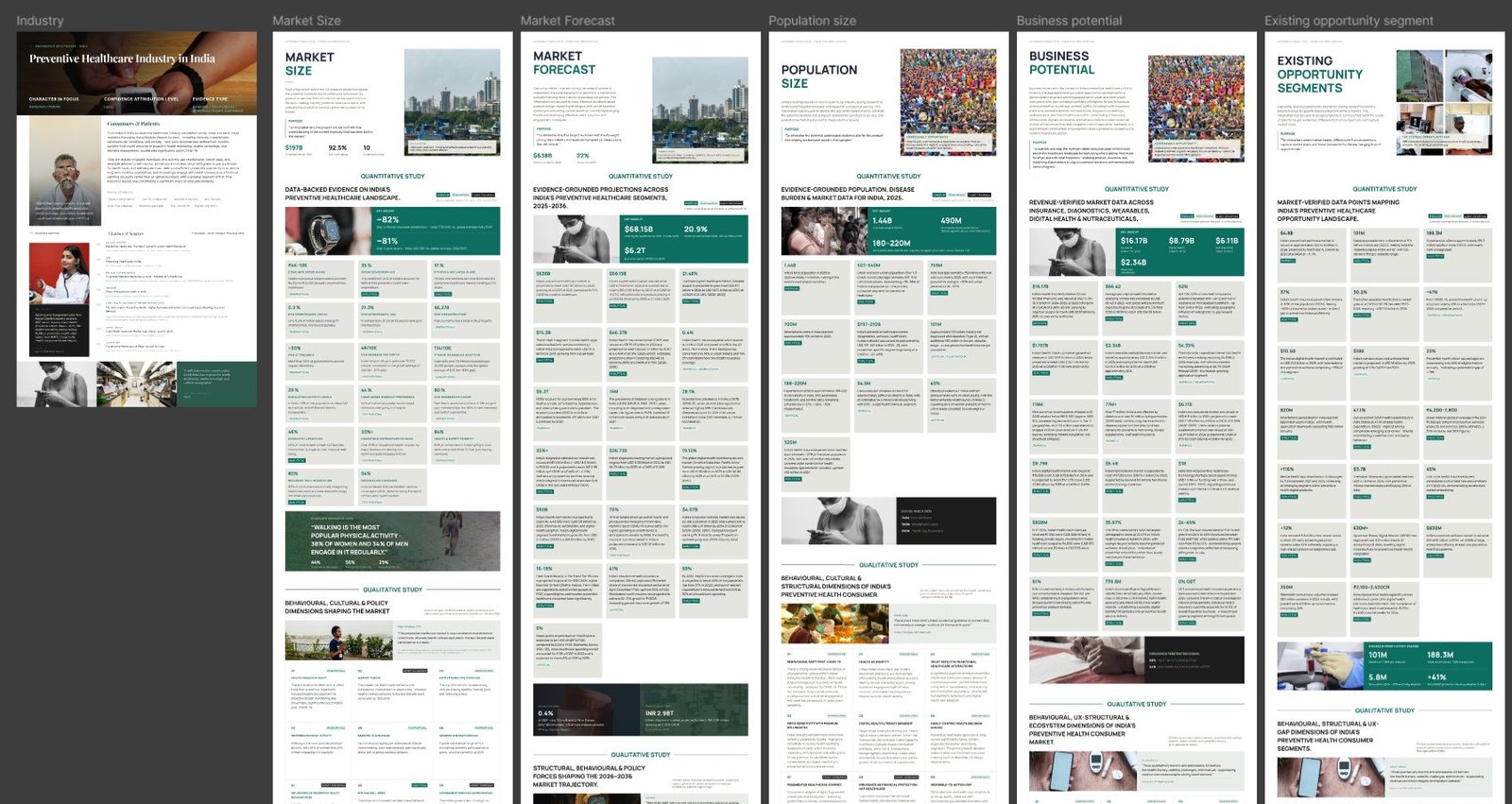
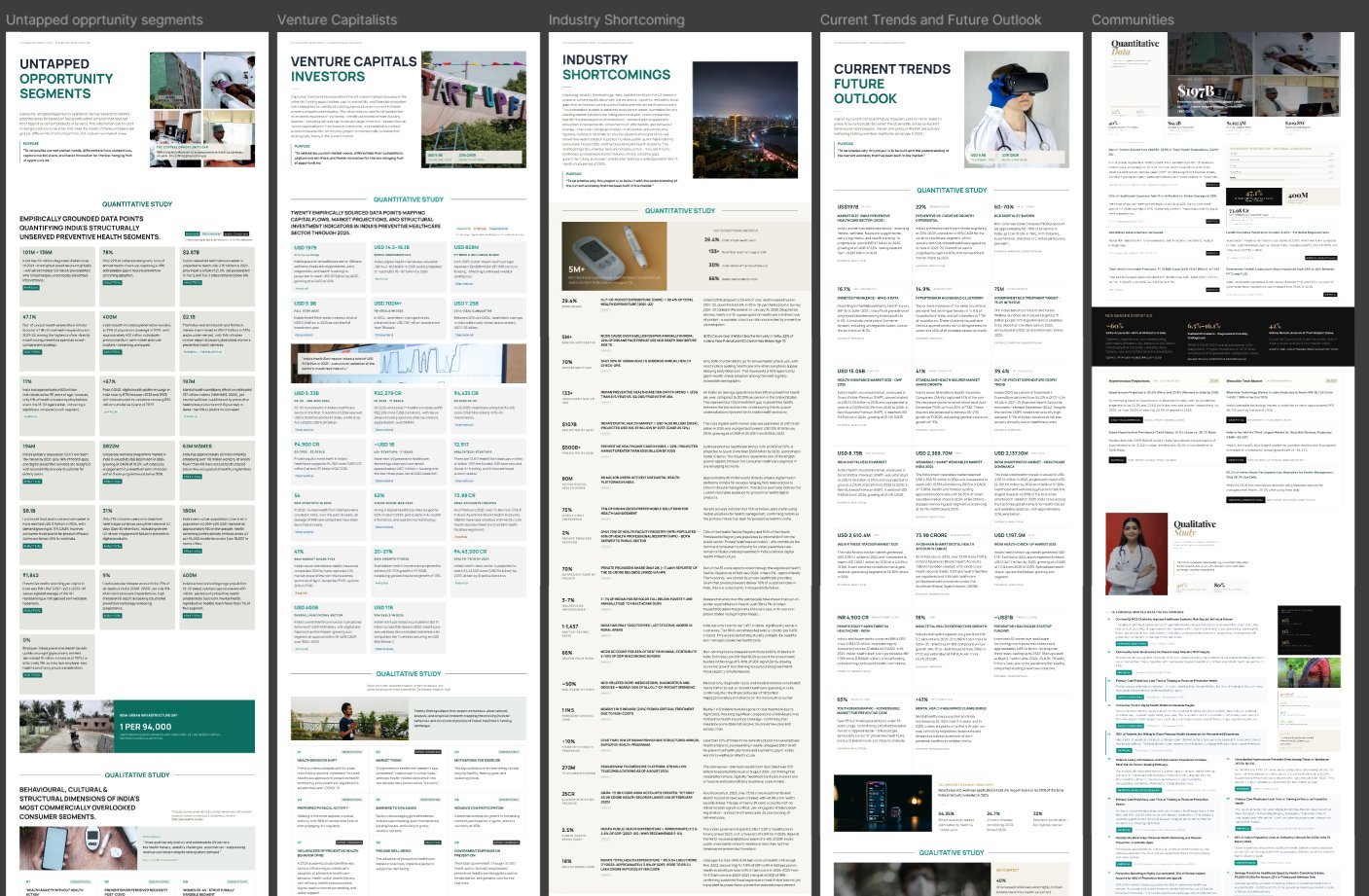
Ten lenses on one industry.
Each lens was studied twice: a quantitative pass for the numbers, and a qualitative pass for the behavioural, cultural and structural reasons behind them.
Three business cases for why prevention stalls.
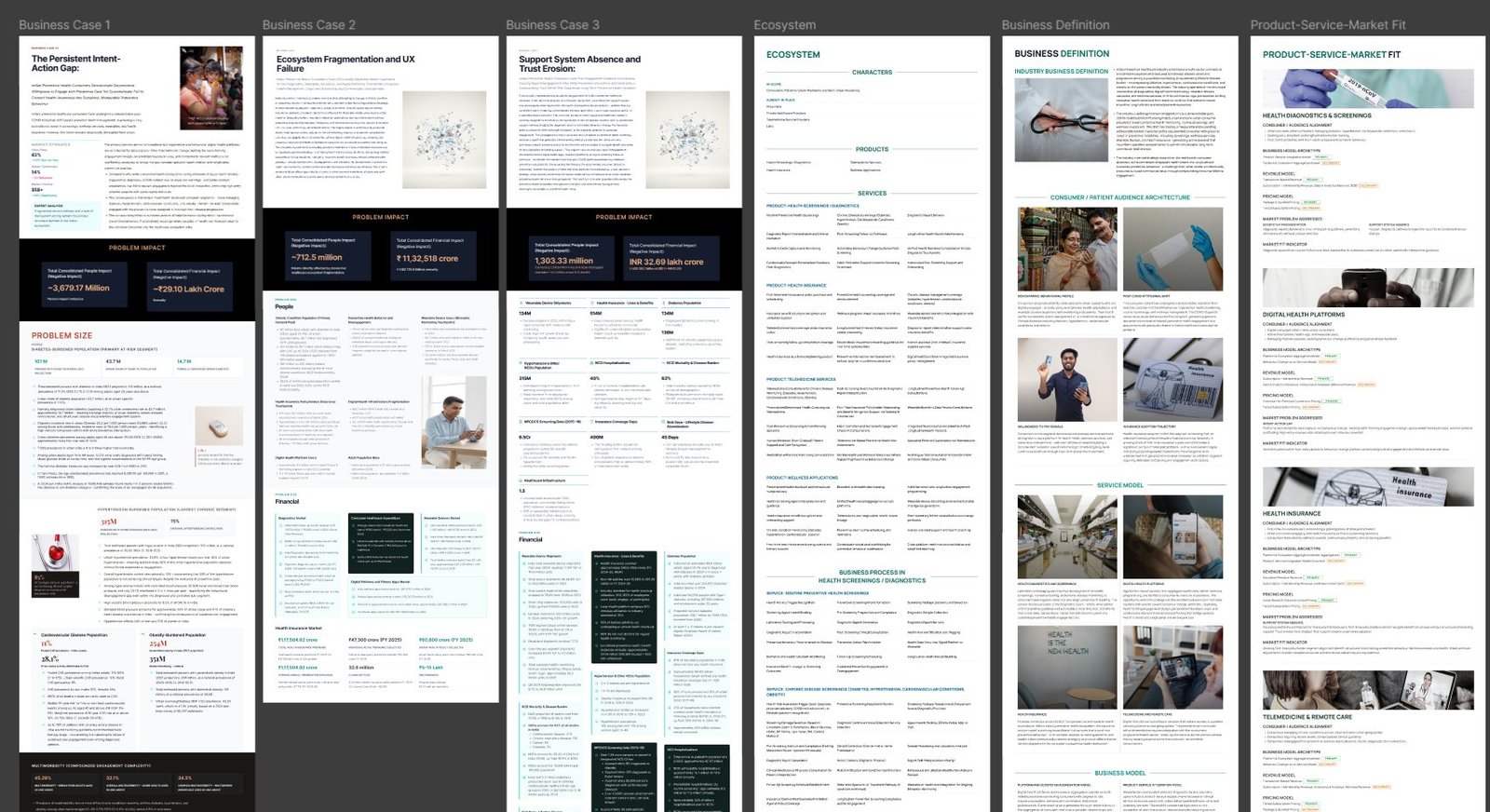
The persistent intent-action gap
Consumers show documented willingness to engage with preventive care, yet systematically fail to convert health awareness into sustained, measurable preventive behaviour.
Ecosystem fragmentation and UX failure
Care is scattered across providers, products and services that do not connect, so the experience of staying healthy breaks at every hand-off.
Support-system absence and trust erosion
Without ongoing support, people lose confidence in preventive offerings and drift away from them.
Who, what and how it is delivered.
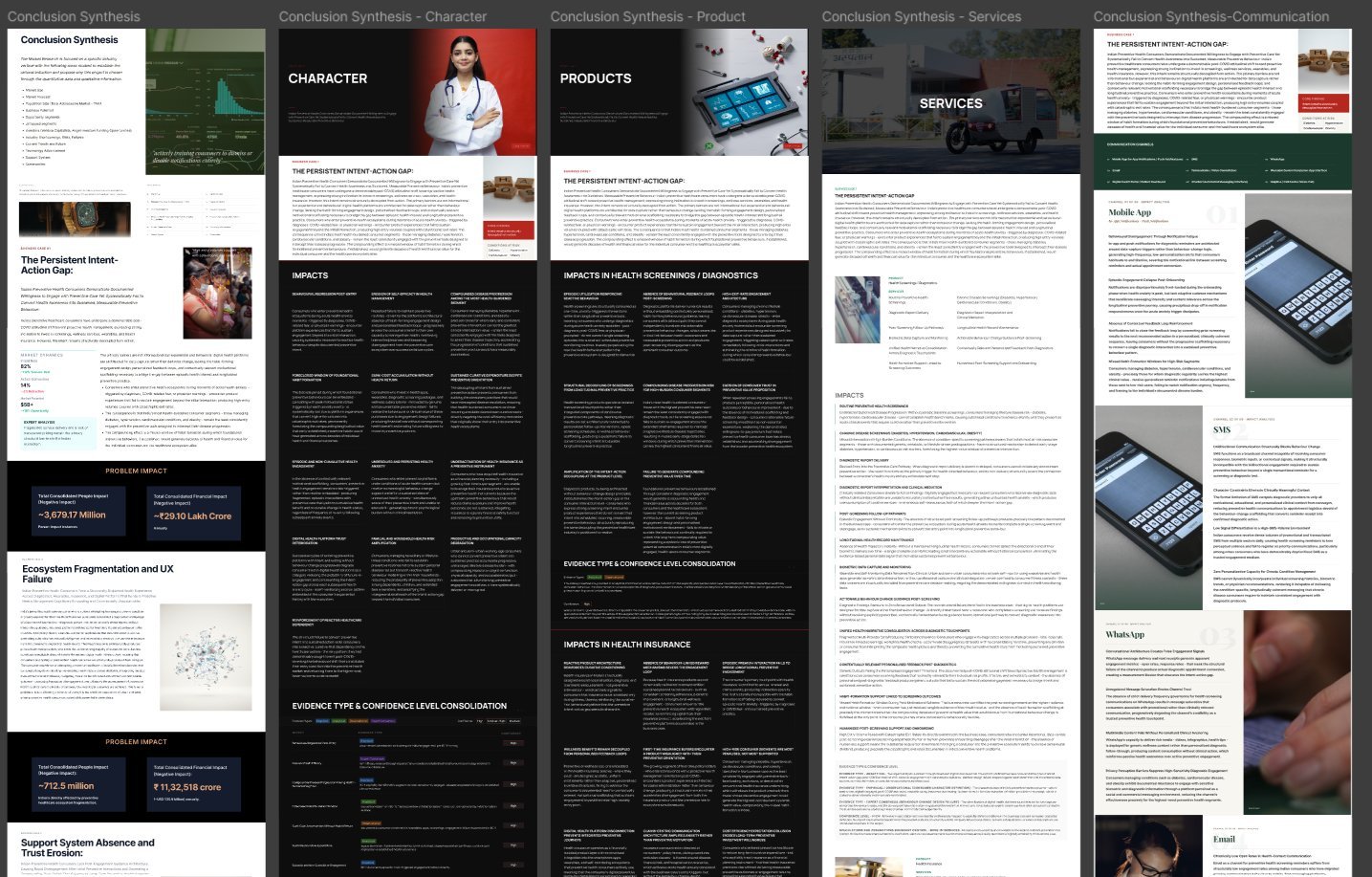
I mapped the industry into characters, products and services, then tested each against the market through product-service-market fit.
- CharactersThe consumers and patients, and the organisations that serve them.
- Products & servicesScreenings and diagnostics, wellness apps, health insurance, telemedicine and remote care.
- Business processesEach service broken into the steps a digital platform has to support.
- Product-service-market fitFour segments assessed for consumer alignment, business model and market problem addressed: health diagnostics & screenings, digital health platforms, health insurance, telemedicine & remote care.
From findings to design inputs.
The conclusion pulled everything back to the intent-action gap and read its impact through each part of the ecosystem: the character, the product, the service and the communication channel.
Communication was broken down channel by channel (mobile app, SMS, WhatsApp, email), so the team could see where nudges and follow-up were most likely to work.
Specific failure points, named and mapped, instead of a general sense that engagement is low.
Flows, IA and wireframes grounded in evidence.
The research went straight into user flows, information architecture and wireframes, and the same intent-action framing carried through to the QIA feature study.
Open the full research (PDF, 17 MB) (opens in a new tab)